


Medical Equipment Housing Thermoforming: An Example Development Case
Prepared for HAWSON · Example Project Workflow
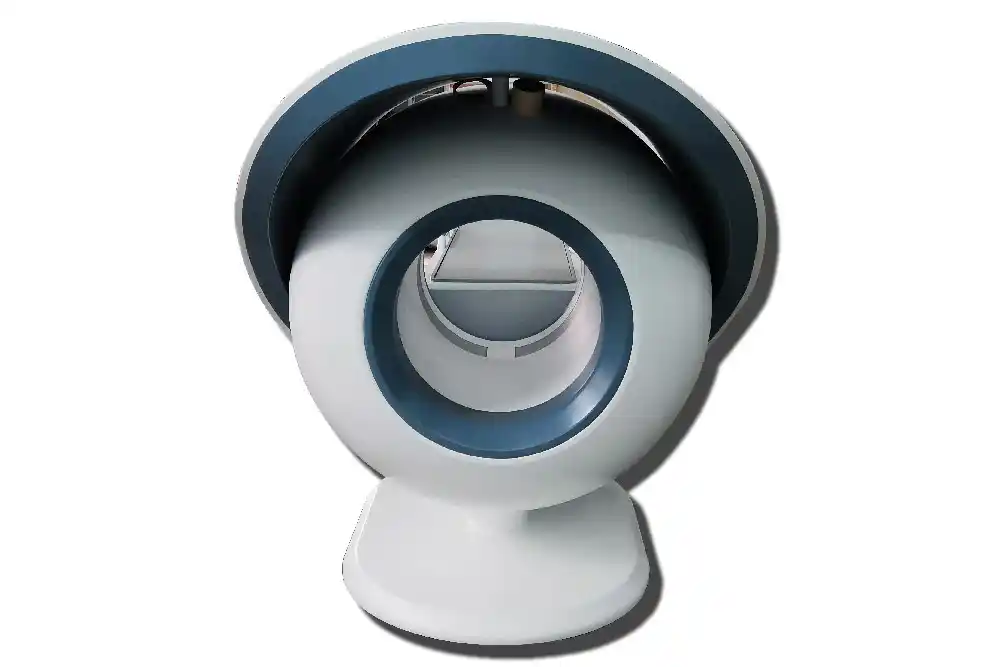
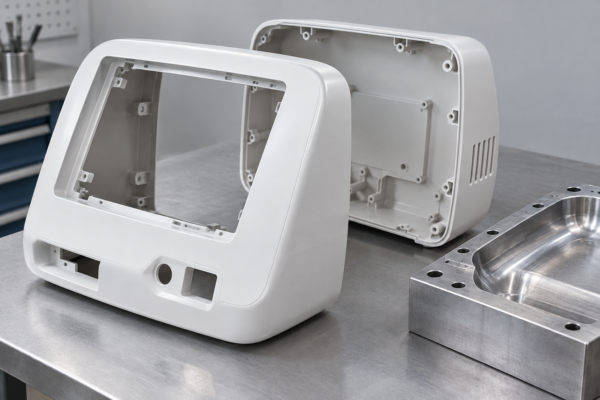
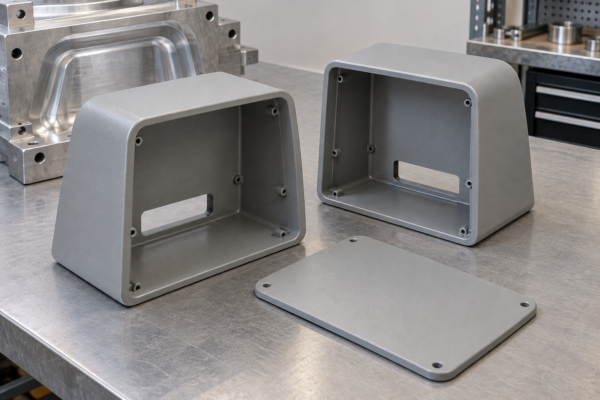
Illustrative case: This scenario is fictional and explains a proposed engineering workflow. It is not a record of a completed customer project. The image is AI-generated, not a customer photograph.
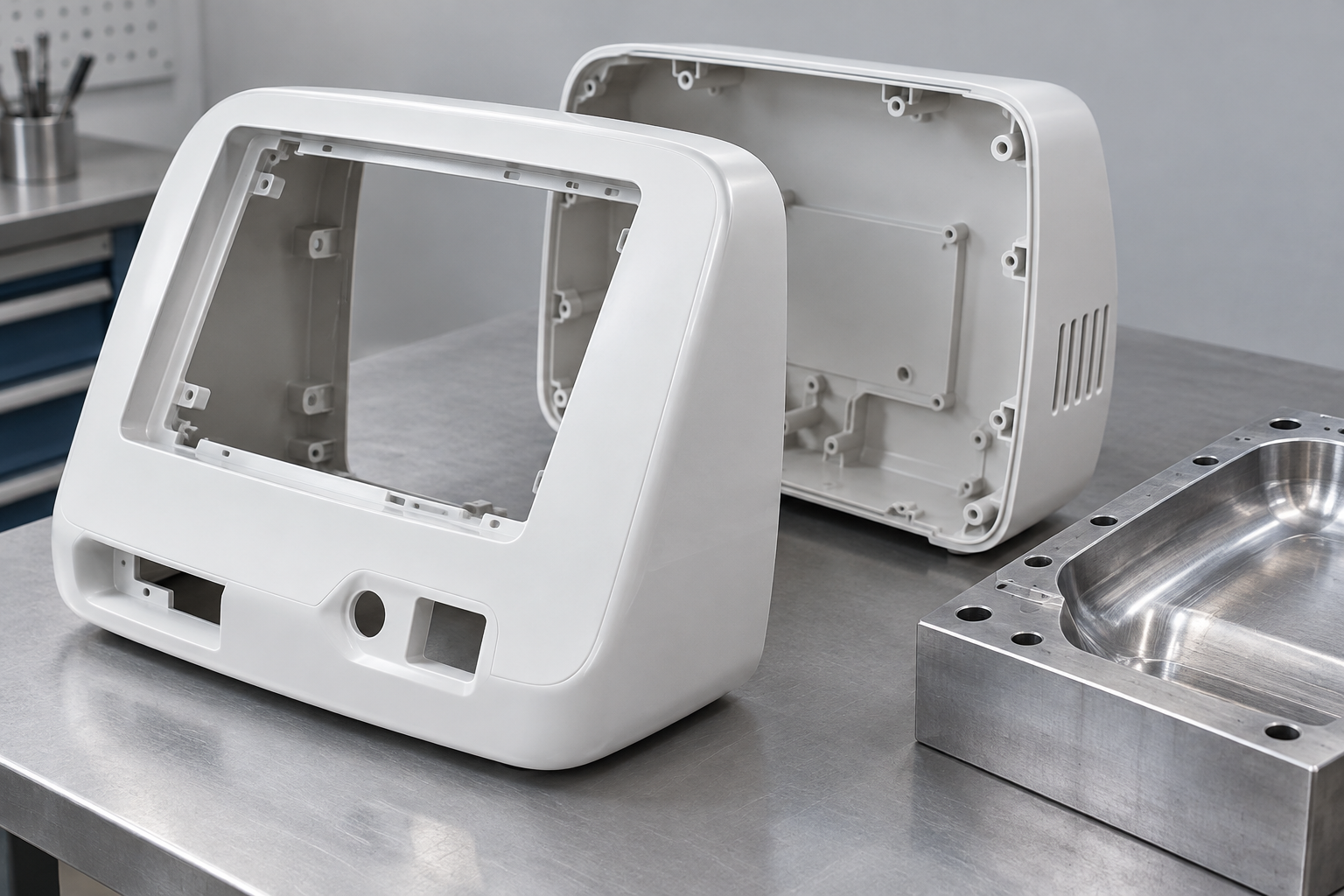
An illustrative medical equipment housing project: design communication, ABS sheet review, mold development, CNC trimming and sample approval.
Project brief: a serviceable diagnostic-console shell
This example considers a desktop diagnostic console with a two-piece outer shell, a display opening and rear service access. The purchasing brief asks for a white appearance and dependable assembly to an existing internal frame. The development problem is to turn an attractive exterior concept into a clear component specification. No customer, order or delivery is represented here.
The initial model leaves several questions unresolved: which surface controls the display position, where the shell joins the chassis, and how technicians remove the rear cover. Rather than price an ambiguous model, the example workflow begins with a drawing review and an interface list.
Customer communication: define interfaces before appearance
The first discussion separates the visible exterior from the functional mounting requirements. The OEM would supply the frame model, display bezel dimensions, fastening method and service procedure. The manufacturer would return an annotated model identifying release concerns and features needing secondary assembly.
A useful review record would ask: must the display be located from the chassis or the shell? Which seam gaps are acceptable? Which cleaning agents will contact the surface? The proposed decision is to reference the display and critical mounting features to the frame, then agree the cosmetic seam separately. A written revision log would record the decision and its owner.
Material and design review
ABS is a candidate for review rather than a confirmed specification. Primex describes ABS sheet options with toughness, rigidity and finish choices; those general properties do not establish suitability for this medical application. The OEM would specify cleaning conditions, heat exposure and any required material documentation.
The starting gauge would be selected after evaluating geometry and the minimum finished wall in critical areas. Internal fastening points may need separately attached components. They should not be assumed to emerge as complex integral bosses from a simple formed sheet. The concept image is therefore an appearance illustration, not a manufacturing drawing.
Mold manufacturing: approve the tool before cutting
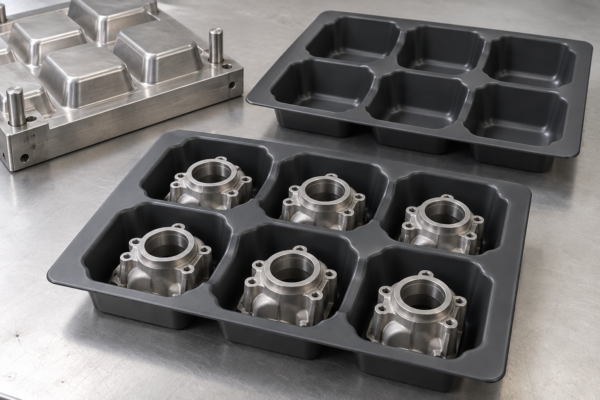
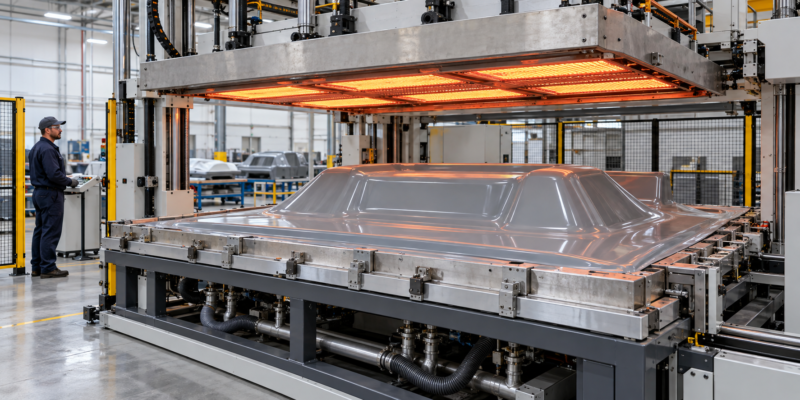
In this example, the tooling proposal would cover separate shell tools and trim fixtures. The tool review would identify the controlled surface, release direction, vacuum evacuation and temperature-control needs. Material choice for the tool would depend on the intended production scope and supplier assessment.
After approval, the sequence would be tool-blank preparation, machining of the forming surface, preparation of evacuation features, surface finishing and assembly to the forming setup. The engineer would compare the completed tool with the approved tool model before trials. The actual dimensions, materials and machining records belong in the real project file.
The trim fixture would locate the cooled part consistently. Display openings and mounting holes would have their own drawing requirements, avoiding the assumption that every feature shares one generic tolerance.
Trial samples, feedback and controlled revisions
The sample review would use the actual frame and display assembly. Inspection would address opening alignment, shell-to-frame clearance, fastening access, seam appearance and surface marks. A cleaning assessment would use the customer’s agreed procedure. Supplying the housing would not certify the finished medical device.
If the display opening appears offset, the review should establish whether the issue comes from the datum, trimming setup, formed geometry or assembly. The example response is to document the cause and update the relevant drawing or fixture, rather than move unrelated dimensions. A new sample would then be checked against the same acceptance criteria.
Production release and the evidence a real case needs
Release would require an approved sample, material specification, controlled drawing, inspection plan and protective packaging instructions. Visible white faces would need agreed handling protection, and the revision would remain traceable through repeat orders.
This illustrative case has no measured outcome. To turn it into a factual case study, retain approved drawings, dated review records, material documents, sample photographs and an inspection report. State only the improvements those records demonstrate. Do not infer device approval, cleanliness performance or tolerance achievement from the appearance of a sample.
Approval checkpoints for this example project
- Requirements: customer-approved interfaces, operating conditions and acceptance criteria.
- Tooling: approved part and tool revisions, scope, ownership and change procedure.
- Samples: fit review and agreed inspection records before production approval.
- Repeat orders: controlled material, trim program, packaging and revision history.
Frequently asked questions
Can thermoformed ABS be used for a medical equipment housing?
It can be considered for an exterior component, subject to the specific grade, application requirements and customer validation. A housing does not establish compliance of the complete device.
What should an OEM send first?
Send the frame and shell models, critical interfaces, cleaning requirements, quantities and a dimensioned drawing. Identify which appearance details can change.
Discuss your own project
Explore our related product category and heavy gauge thermoforming guide. Send a drawing, intended use, material requirements and quantity forecast so the manufacturing scope can be reviewed for your component.
Editorial scope and technical references
Prepared on 13 October 2026 for HAWSON. The narrative, communication examples and concept image are simulated. No real customer outcome, independent test, certification or expert review is claimed. The following sources provide general technical context, not evidence of a completed project.
- Primex ABS sheet information: material selection requires the applicable grade and project specification.
- SPE Heavy Gauge Troubleshooting Guide: general forming-development reference; it does not validate this concept.
