




Custom Thermoformed Vehicle Panels: An Example Tooling and Fit Review
Prepared for HAWSON · Example Project Workflow
Illustrative case: This scenario is fictional and explains a proposed engineering workflow. It is not a record of a completed customer project. The image is AI-generated, not a customer photograph.
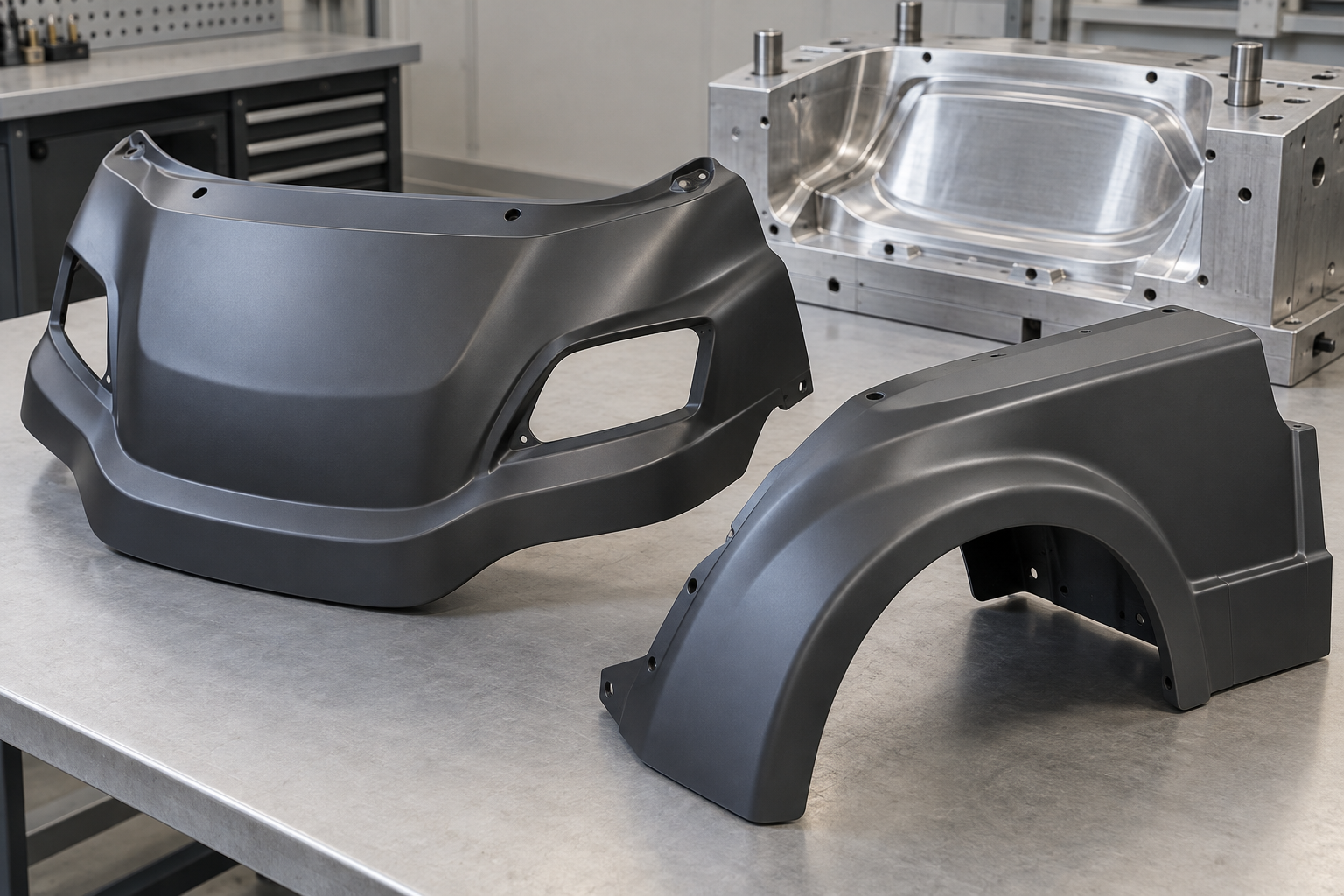
An illustrative utility-vehicle panel development case covering mounting-point communication, weatherable sheet review, forming tools and assembly checks.
Project brief: a utility-vehicle cowl and fender
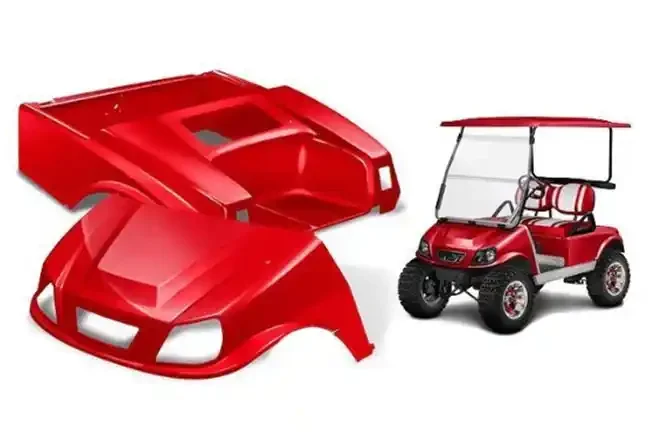
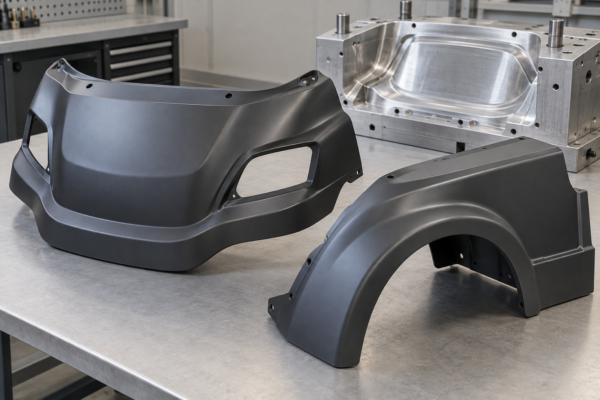
This fictional project explores a front cowl and side fender for a utility vehicle. The example brief calls for a graphite appearance and attachment to an existing frame. Styling matters, but the main engineering challenge is maintaining wheel clearance, service access and mounting relationships across the panel set.
The concept provides a visual direction without proving roadworthiness or production readiness. Development would begin with the chassis geometry and an agreed assembly configuration, not with an assumption that the illustrated panels already fit a real vehicle.
Communication: separate styling from fixed vehicle geometry
The OEM would identify the wheel travel envelope, fixed mounting points, neighboring panels and areas exposed to heat. Purchasing would clarify prototype needs and repeat-order forecasts. The supplier would mark design questions on the model so styling changes can be considered before tooling.
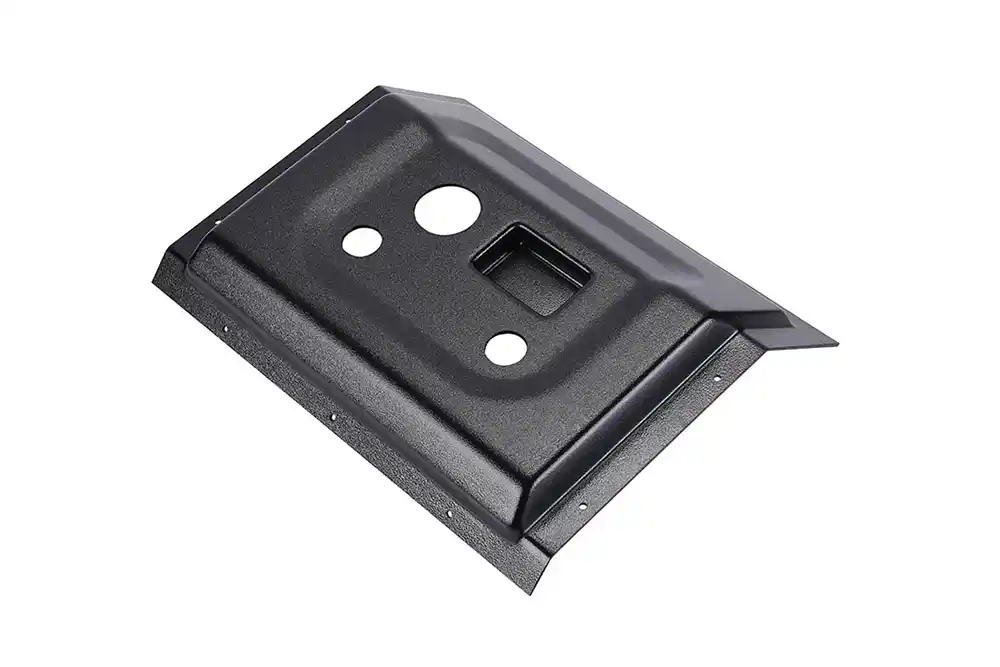
One example decision concerns a mounting hole near a curved edge. The team would compare assembly access, flange width and material distribution, then agree whether to relocate the hole or change the flange. The approved answer would be captured in the panel drawing and chassis reference revision. It should not remain an informal chat instruction.
Sheet selection and panel feasibility
Material review would compare sheet grades against sunlight exposure, cleaning, impact requirements and the intended finish. A black color alone does not establish weather resistance. Primex lists weatherable ABS options, demonstrating why a specific grade matters when discussing outdoor applications. No particular supplier grade is endorsed for this fictional vehicle.
Design review would consider release direction, radii and transitions around the wheel contour. The starting sheet gauge and finished-wall requirements would be separate specifications. Fixing an appearance issue should not reduce the wall in a functional mounting area without review.
Mold manufacturing and trim-fixture preparation
The proposed tool scope would cover the cowl and fender separately. Before machining, the tool review would confirm the controlled surface, the locations requiring forming detail and the access needed for trimming. Vacuum paths and cooling provisions would be assessed for the selected geometry.
Manufacturing would proceed through tool-blank preparation, CNC surface machining, preparation of evacuation features, finishing and setup inspection. Trial work would compare the formed surfaces with the approved design. The tool ownership, permitted changes and storage arrangements would be included in the quotation.
The CNC trim fixture would be developed alongside the assembly datum plan. Wheel contours and mounting holes should be checked from agreed references; a visually symmetric shell is not sufficient proof of mounting accuracy.
Sample fitting and feedback loop
The OEM would fit samples to a representative chassis using the intended fastening method. The review would record panel gaps, contact with adjacent components, wheel clearance under the agreed conditions and accessibility for installation. Cosmetic acceptance would use a defined lighting condition or reference sample.
If an edge interferes with the frame, the review would compare the formed blank, trim program, fixture and chassis revision. In this example, a controlled trim change would be considered only after confirming the cause. The next sample would carry a new revision and be checked with the same assembly method. No successful road test is implied.
Production approval and transport protection
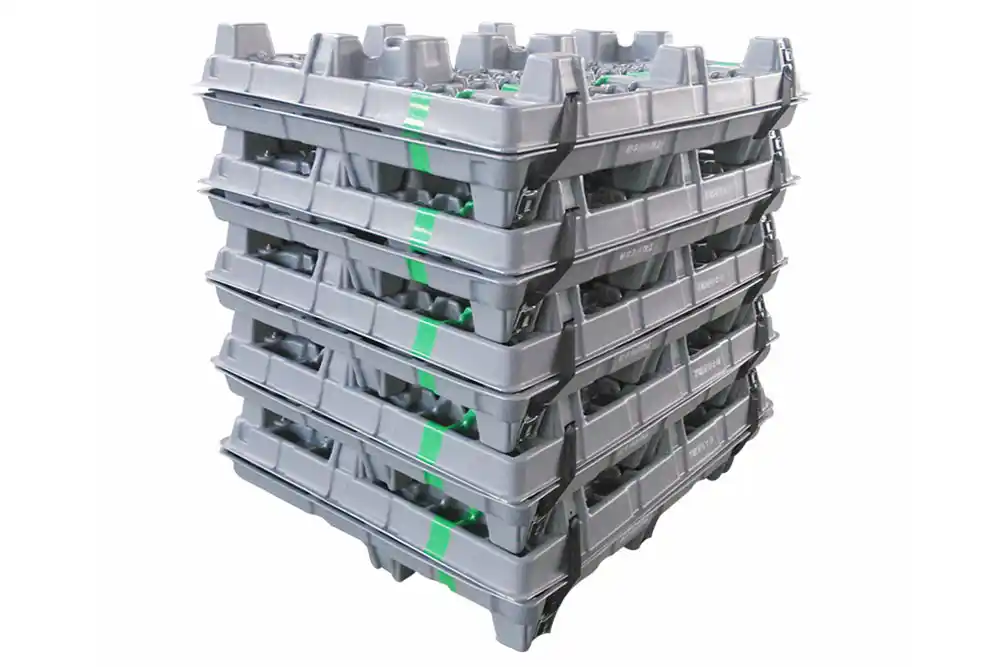
A production release would define the approved material and color, panel revision, fixture setup, inspection checkpoints and packing method. Packaging would protect visible faces and mounting flanges against rubbing or deformation in transit. The OEM would remain responsible for vehicle-level requirements and validation.
A real case study would need photographs of the actual vehicle assembly, sample-approval records and any relevant test reports. This example makes no claim about reduced cost, crash performance, service life or an achieved production quantity. Its value is the communication and tooling checklist for planning a genuine project.
Approval checkpoints for this example project
- Requirements: customer-approved interfaces, operating conditions and acceptance criteria.
- Tooling: approved part and tool revisions, scope, ownership and change procedure.
- Samples: fit review and agreed inspection records before production approval.
- Repeat orders: controlled material, trim program, packaging and revision history.
Frequently asked questions
Does ordinary ABS automatically suit an outdoor vehicle panel?
No. Confirm the specific grade and required environmental performance, then agree how the part will be validated.
Why inspect a panel on a chassis?
The assembly can reveal clearance, access and mating issues that a visual inspection of an isolated panel does not address.
Discuss your own project
Explore our related product category and heavy gauge thermoforming guide. Send a drawing, intended use, material requirements and quantity forecast so the manufacturing scope can be reviewed for your component.
Editorial scope and technical references
Prepared on 13 October 2026 for HAWSON. The narrative, communication examples and concept image are simulated. No real customer outcome, independent test, certification or expert review is claimed. The following sources provide general technical context, not evidence of a completed project.
- Primex ABS sheet information: material selection requires the applicable grade and project specification.
- SPE Heavy Gauge Troubleshooting Guide: general forming-development reference; it does not validate this concept.
