





ABS Thermoforming Design Guide: Material, Thickness and Cost
Published by HAWSON · Manufacturing Knowledge Base
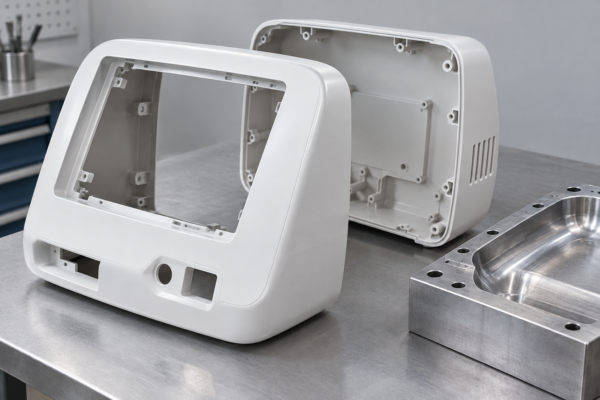
Planning an ABS plastic housing, equipment cover or industrial enclosure? A useful ABS thermoforming quotation starts with the part’s function, drawing and acceptance criteria. Material grade, starting sheet thickness, geometry, tooling and secondary operations all need to be considered together.
This guide helps OEM buyers and design engineers prepare a clearer project brief. It combines published material information with a practical drawing-review checklist. Final specifications should be agreed for the individual part rather than copied from a general guide.
Quick answer: what should you confirm first?
- The operating environment and suitable ABS sheet grade.
- The minimum finished wall thickness at critical locations.
- Draft, corner radii, draw depth and the intended mold-contact surface.
- Trim lines, holes, assembly interfaces and their inspection requirements.
- Prototype quantity, production quantity and tooling scope.
1. Choose an ABS grade for the application
ABS is a family of materials, not one fixed specification. Sheet supplier Primex describes ABS options with impact resistance, rigidity, different colors and textures, and weatherable variants. These options make grade selection important: the name “ABS” alone does not establish suitability for a finished part. See Primex’s ABS sheet information.
For a project brief, state whether the part is used indoors or outdoors, the expected temperature conditions, contact with cleaners or chemicals, and appearance requirements. If flame performance or another compliance requirement matters, identify the applicable requirement and request documentation for the proposed grade. Do not assume that a generic ABS sheet carries a particular approval.
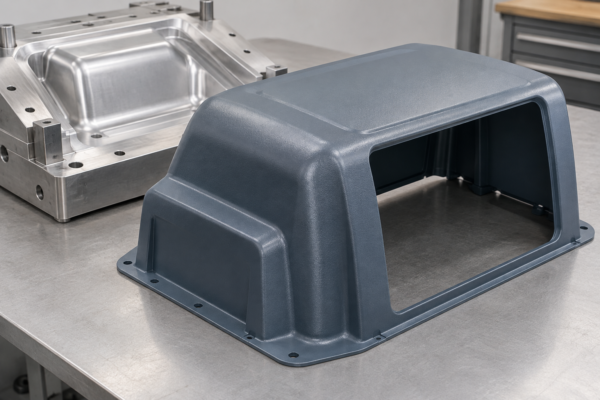
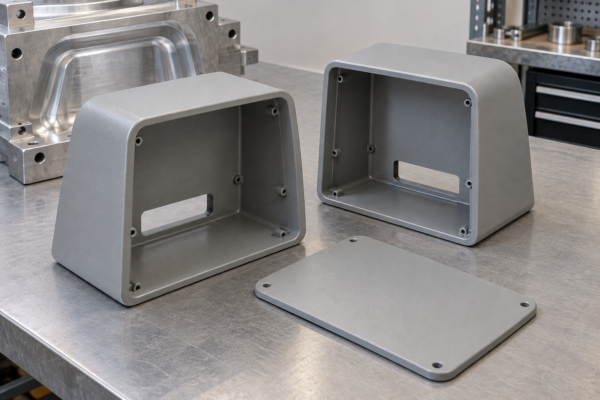
Typical projects to discuss include industrial machinery covers, vehicle components and electrical enclosures. Suitability still depends on the specific use.
2. Specify finished wall thickness, not just sheet thickness
During thermoforming, a heated sheet stretches to follow the tool, so its thickness can vary across the formed part. SEKISUI KYDEX’s wall-thickness brief explains the relationship between stretching, geometry and local thinning. Its examples concern KYDEX sheet; they illustrate the principle and should not be treated as ABS processing specifications. See Technical Brief 140F.
On your drawing, distinguish the starting sheet thickness from the minimum acceptable finished thickness. Mark areas that matter for mounting, impact exposure or assembly. A request such as “maintain the agreed minimum wall at these marked locations” is more useful than assuming the finished housing will retain the sheet’s nominal thickness everywhere.
Ask how thickness will be assessed on the sample, which locations will be checked, and whether the proposed geometry needs revision. Record the agreed result before production approval.
3. Review draft, radii and undercuts before tooling
Draft helps release a formed part from its tool. Smooth transitions and suitable radii help material flow into the shape, while undercuts can complicate removal. The appropriate design depends on tool type, depth, surface texture and material. Spartech’s Thermoforming Manual discusses these relationships in its part-design sections.
Instead of applying one universal draft angle to every feature, flag the walls and corners that cannot change and ask the manufacturer to review the rest. Identify which surface controls appearance and which surface must fit another component. This gives the tooling discussion a clear starting point.
4. Define trimming and assembly requirements
A part review should distinguish formed surfaces from features created after forming. Spartech’s manual discusses tolerances alongside shrinkage and assembly considerations; this supports agreeing requirements by feature rather than assuming a single tolerance for the entire housing.
For your RFQ, label hole centers, mounting surfaces, trim edges and mating interfaces. Include a reference datum or another clear measurement basis. If a feature needs a tight fit, show the mating component or explain the intended assembly. Ask the supplier to confirm what can be achieved and how it will be inspected.
5. Understand what changes the quotation
Request a quotation breakdown so you can compare the same scope between suppliers. Useful items to separate include:
- Material: grade, color, finish and starting thickness.
- Tooling: development scope, trial work, revisions and ownership arrangements.
- Part production: quoted quantity and forming requirements.
- Secondary work: trimming, drilling, assembly and any agreed finishing.
- Quality and delivery: inspection records, protective packaging and shipping terms.
Clarify whether sample charges, tooling revisions and freight are included. Give both the first-order quantity and the expected repeat-order quantity; a supplier cannot make a meaningful comparison from “best price” alone.
6. Prepare a complete drawing package
| Information to provide | What to clarify |
|---|---|
| 3D model and dimensioned drawing | Revision, units, overall size and critical features. |
| Application | Environment, loads, cleaning and assembly conditions. |
| Material and appearance | Grade preference, thickness, color and finish. |
| Acceptance criteria | Required dimensions, minimum wall thickness and visual standards. |
| Quantities and schedule | Samples, first order, repeat orders and target delivery. |
| Delivery requirements | Destination, packaging and requested shipping terms. |
If you do not have a final material choice, describe how the part will be used. If you only have a reference sample, state which dimensions and features must be retained. Mark unanswered questions clearly so they can be resolved during technical review.
7. Confirm the sample before production
Use a written approval checklist covering dimensions, mounting fit, critical wall locations, color, finish and any agreed functional checks. Keep the approved drawing revision and sample-approval record together. If the design changes, confirm whether tooling, price, inspection or timing must change too.
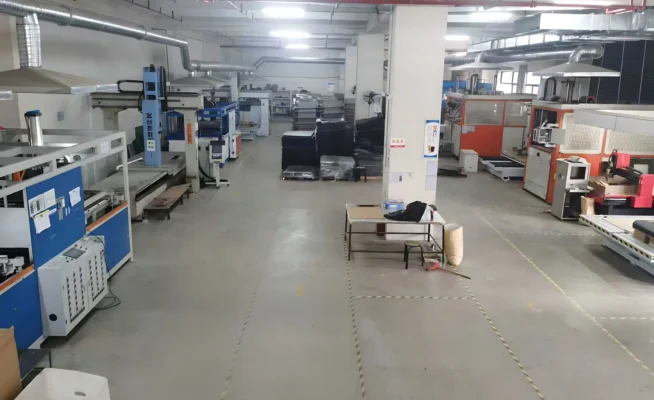
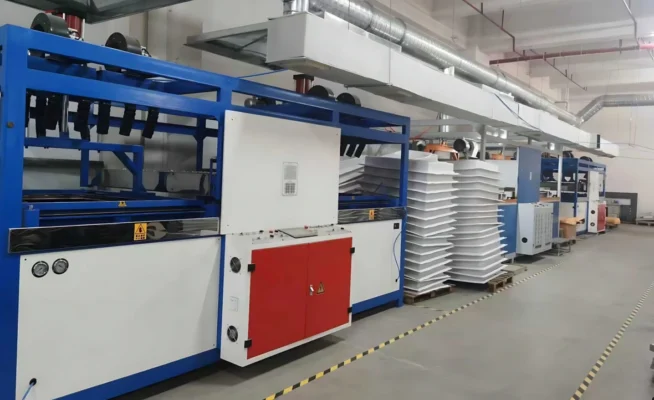
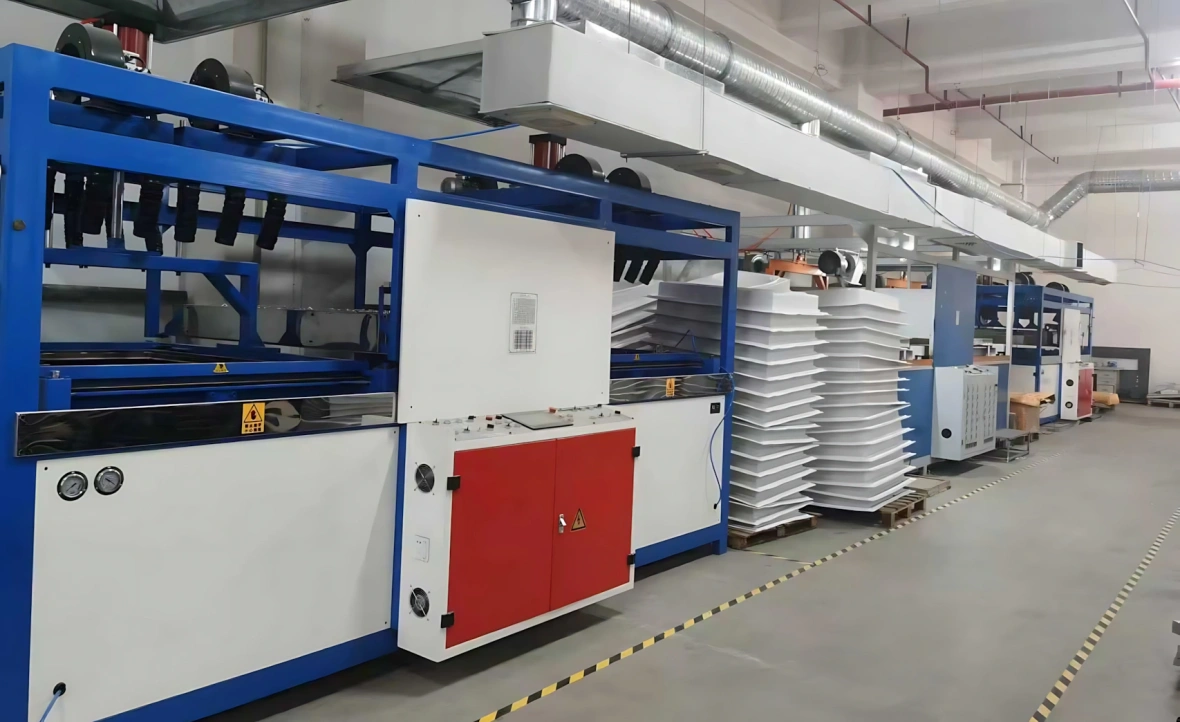
HAWSON’s published manufacturing capabilities include drawing review, mold development, thermoforming and CNC trimming. To discuss the scope for your part, explore our factory or send your drawing for a project review. Manufacturing limits and acceptance criteria are confirmed for each project.
ABS thermoforming FAQ
Will the finished part have the same thickness as the original sheet?
No. Forming stretches the sheet, and local thickness can vary. Specify the finished minimum at important locations and confirm it through the agreed sample checks.
Is ABS automatically suitable for outdoor use?
No. State the exposure conditions and request a suitable grade or sheet construction with supporting supplier information. Weatherable options exist, but not every ABS sheet has the same performance.
Can every hole and edge use the same tolerance?
Agree tolerances feature by feature. Give special attention to the interfaces that control assembly, and ask the manufacturer to confirm the inspection method.
Can I get a quotation without a finished 3D model?
You can start the discussion with dimensions, photographs or a reference sample. Explain what information is missing. A preliminary estimate may need revision when the drawing and production scope are finalized.
Technical scope and references
Technical references: Primex ABS sheet information, SEKISUI KYDEX Technical Brief 140F, and Spartech’s Thermoforming Manual, linked above. Use grade-specific supplier data and the agreed project specification for final decisions. Article prepared on 13 October 2026.
